
Draft storyAt Bracken Waters
A box and a fish
An old cardboard-to-caviar story, and why we check what is true today.
A draft: the words and pictures are waiting for an educator’s review.

Who’s in it
LeenaExplains the old story and keeps the modern example separate.Meet Leena IslaOpens the old story and helps sort the pictures.Meet Isla
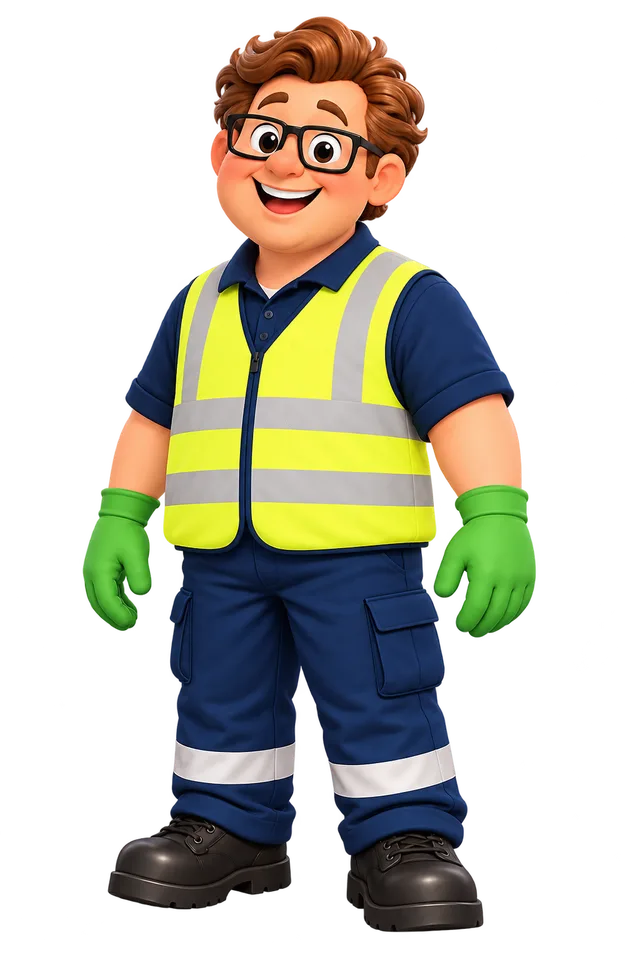 EddieThinks the old story is happening today.Meet Eddie
The story
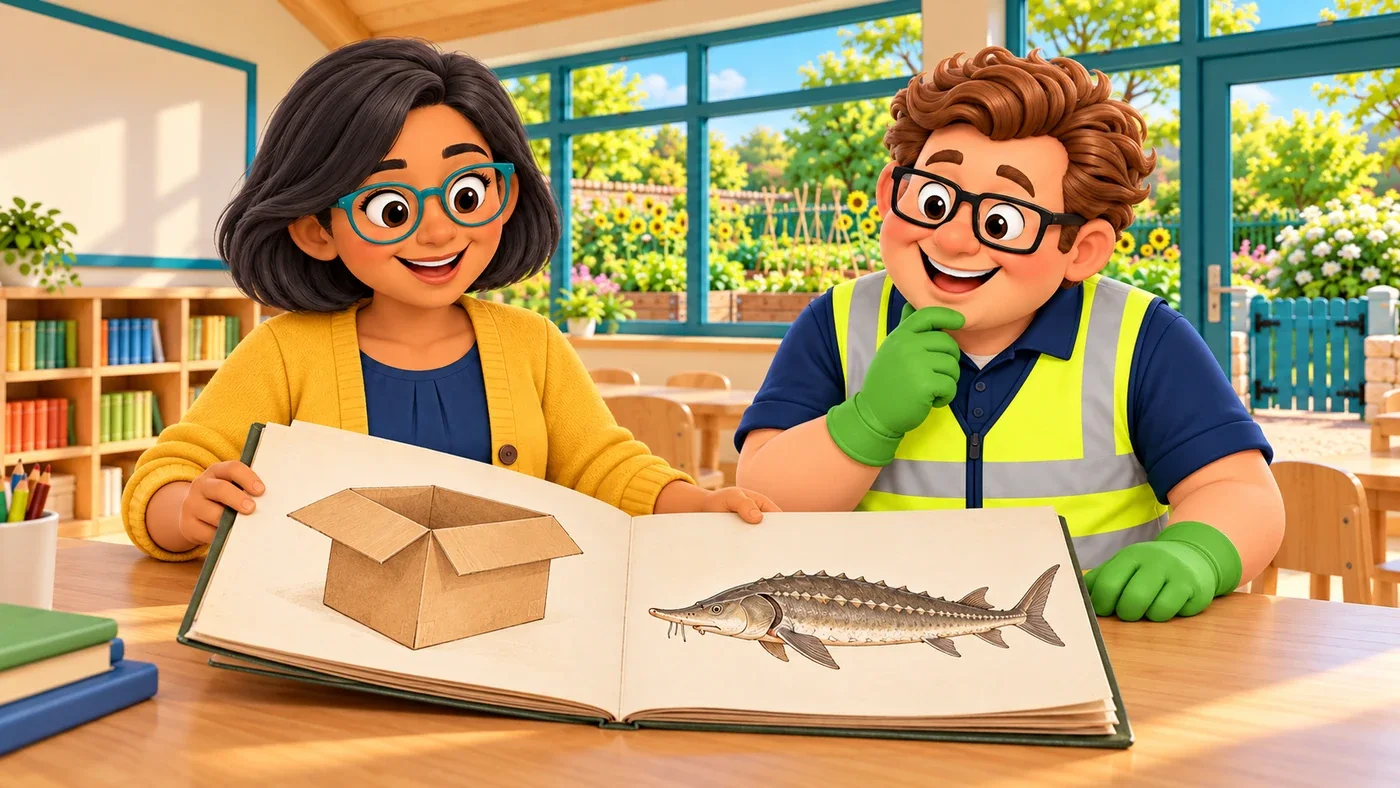
In the classroom, Isla opened an old story called Cardboard to Caviar. It had a picture of a cardboard box and a long fish called a sturgeon.
For grown-ups: Cardboard to Caviar was a real scheme in Wakefield, England, in the 2000s. The pictures in this story are newly drawn, not old photographs.
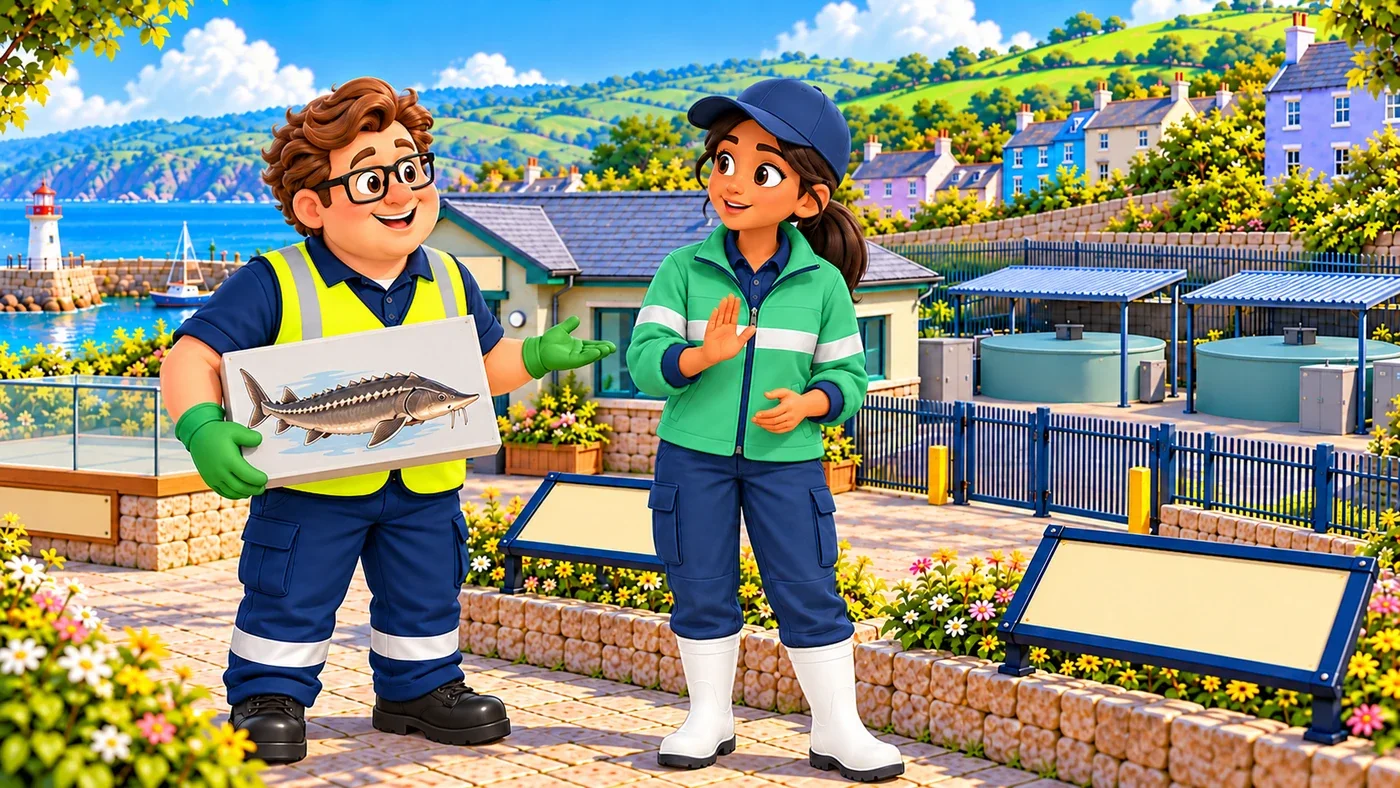
At Bracken Waters, Eddie held up the picture. Was this what happened here today? Leena raised her hand to stop him there.
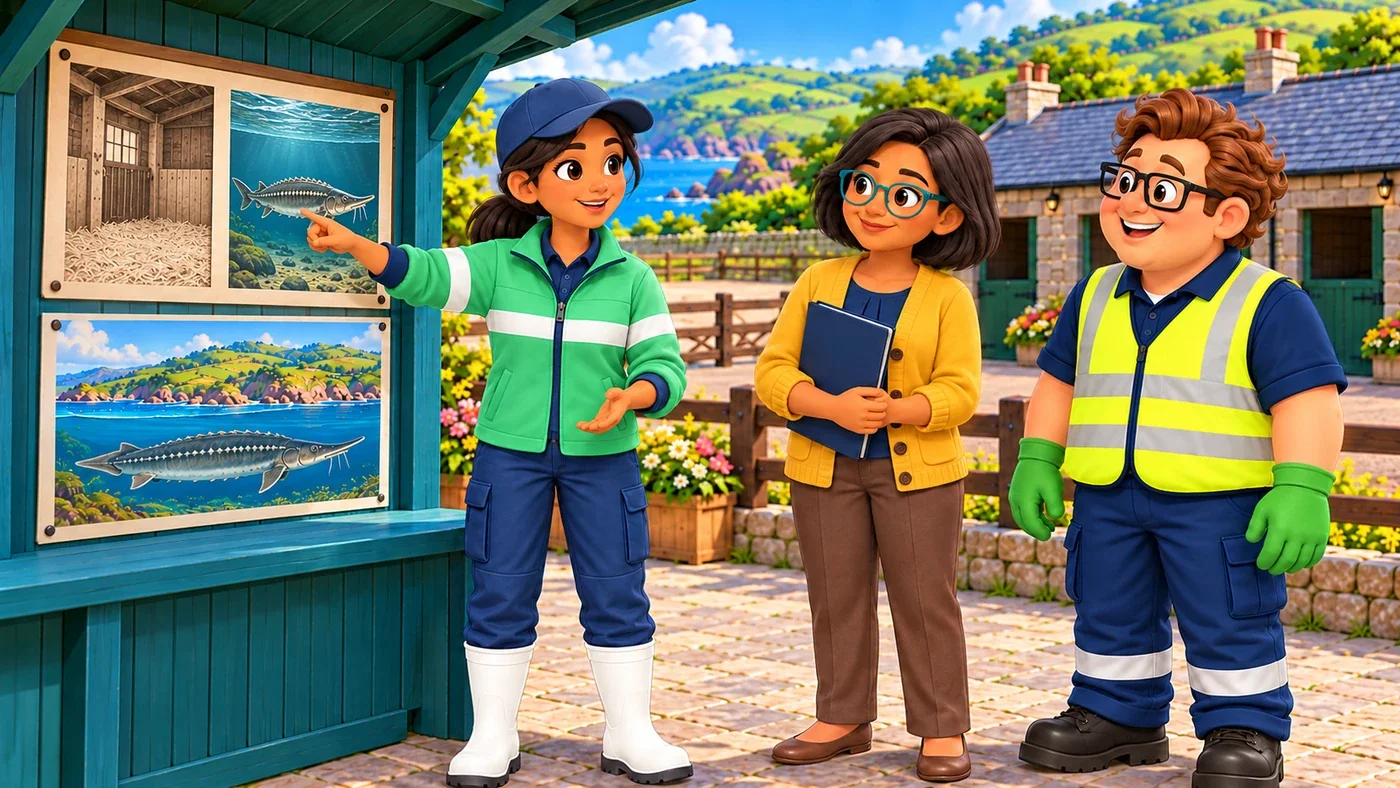
At the stables, Leena explained that the old story was real, from years ago. The island picture was made up to help them learn.
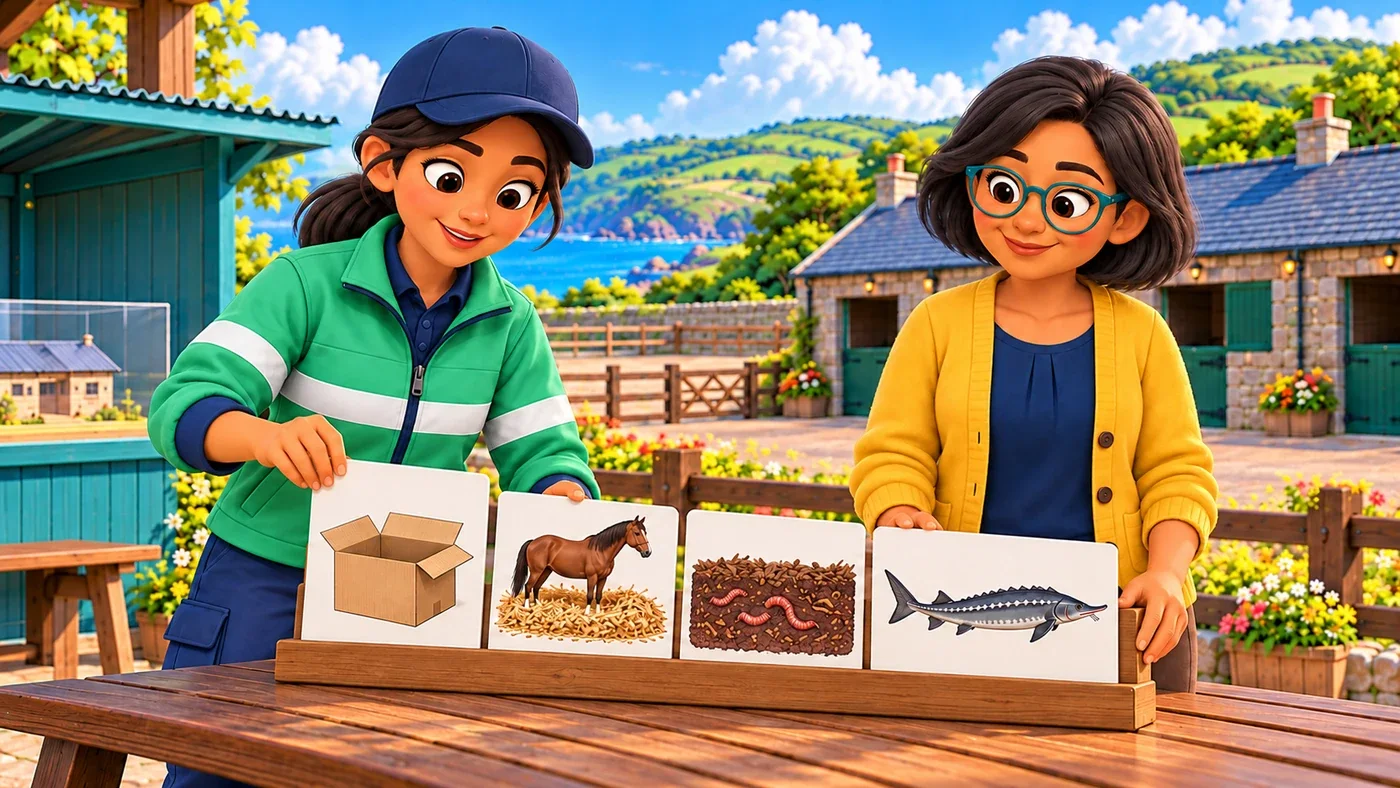
Leena and Isla put the cards in order: cardboard, then horse bedding, then worms, then the sturgeon. Each step did one job.
For grown-ups: The historical steps, in order: suitable collected cardboard was prepared as horse bedding; the used bedding and manure went to worm composting; the worms were one food for sturgeon; and the sturgeon’s eggs were sold as caviar. Compost was another result. The cardboard did not turn into fish. The worm step is how the scheme is usually described, and we haven’t confirmed every detail ourselves. This is not a home project or something happening today.
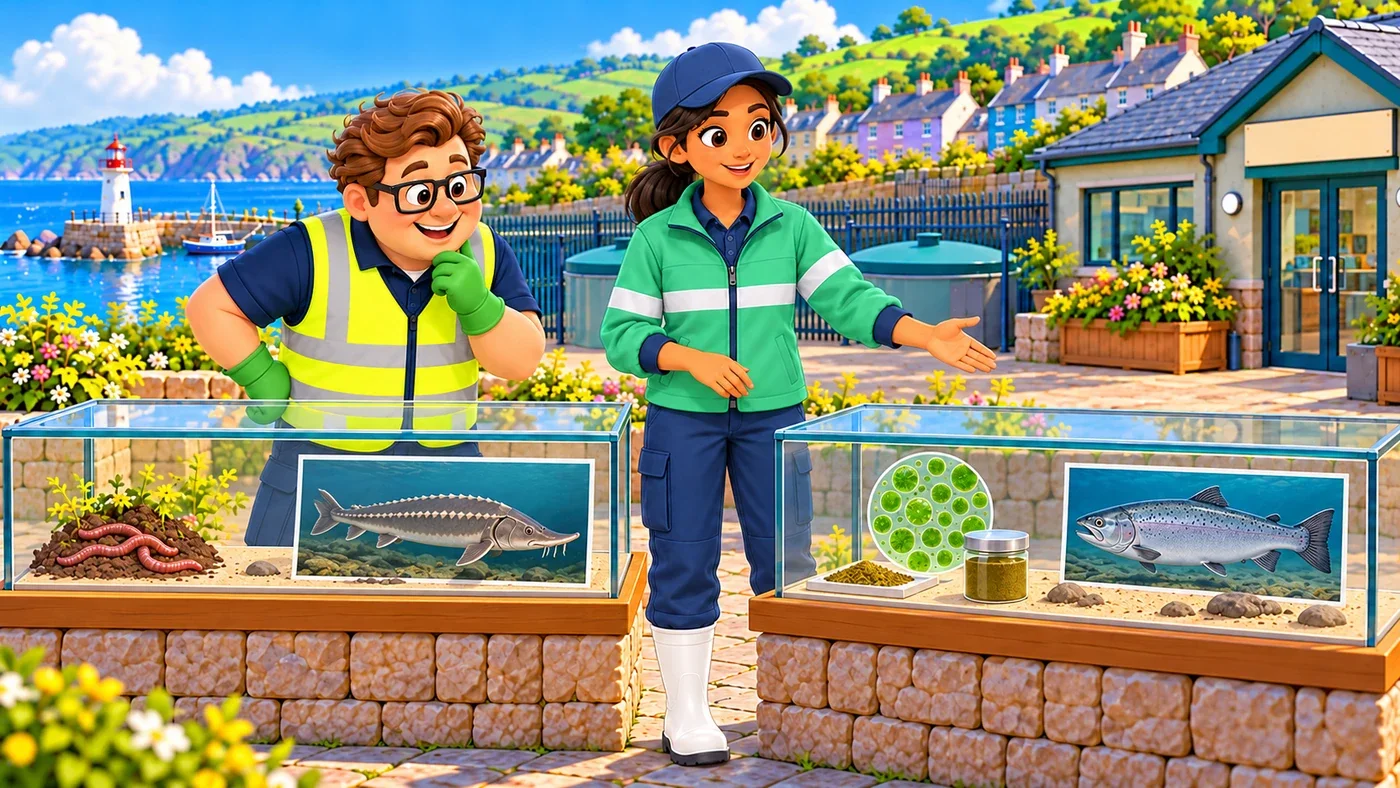
Back at Bracken Waters, Leena showed Eddie a different, modern example. Tiny algae can be grown to make one ingredient for salmon food.
Leena: “Tiny algae can make a useful ingredient. The fish still need a properly balanced diet.”
For grown-ups: The separate modern example: a Scottish company uses suitable whisky-industry co-products to grow microalgae, which are processed into an omega-3 ingredient for fish feed (checked 20 October 2026). It is one ingredient, not the whole diet, and the story does not claim it is used on the island.
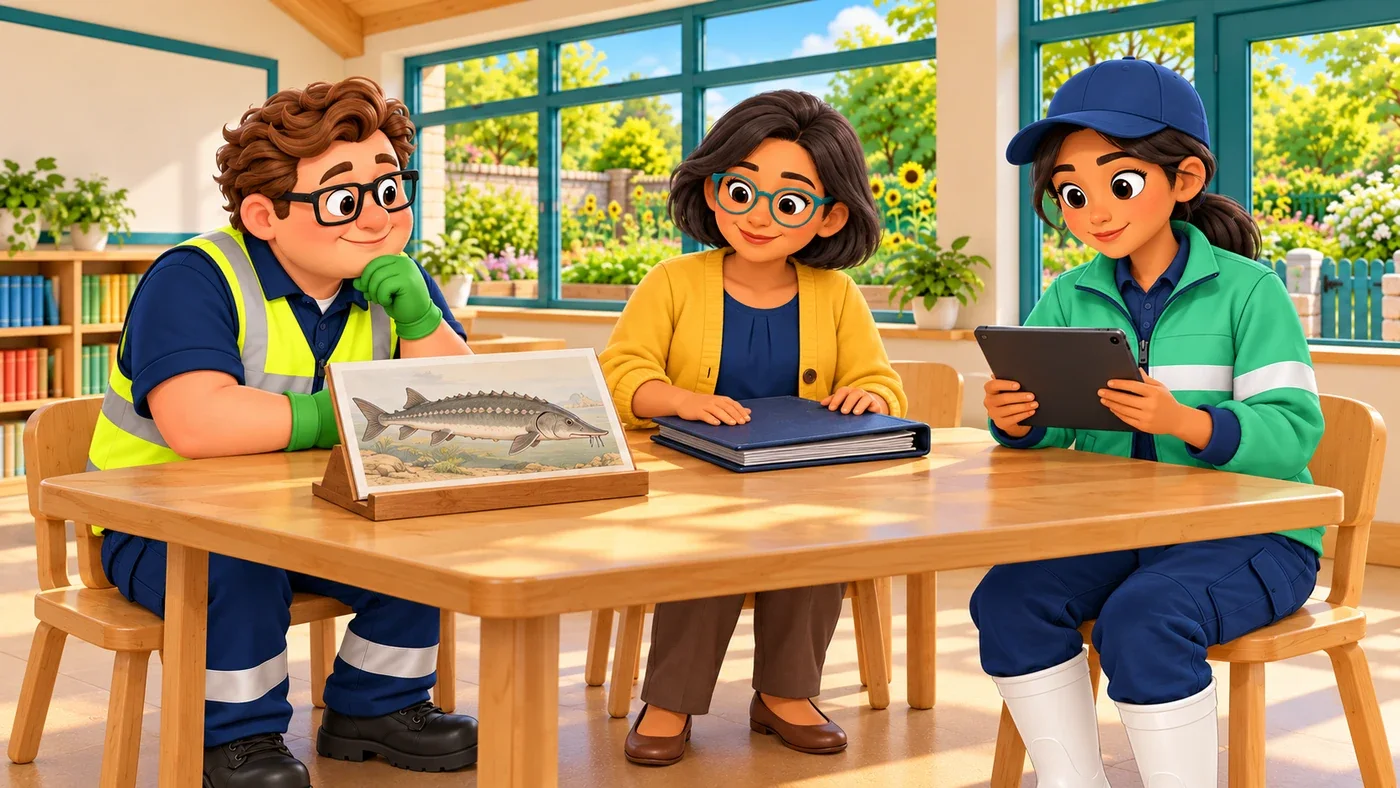
Back in class, Isla closed the old story. Leena checked her tablet, because history needs a date, and today needs checking too.
Draft, 20 October 2026. The words and pictures are not yet reviewed by an educator. The story follows the outline in our story guide.
The real-life bit
Cardboard to Caviar was a real scheme in Wakefield, England: used cardboard from restaurants was shredded and sold as horse bedding (Nkandu and Alibaba, 2018), and the scheme went on to feed fish that produced caviar (The Fish Site, 2006). The worm-compost step in the pictures is how the scheme is usually described; we haven’t confirmed every detail ourselves. It is history, not something happening on an island today. A separate modern example: a Scottish company grows microalgae on whisky-industry co-products to make an omega-3 ingredient for fish feed, which is one ingredient, not the whole diet. Gullbrae is made up. Your council’s own rules are the ones to follow.