
Draft storyAt Bracken Waters
Water is part of the story
A fish picture stops too soon, so Zara asks what else belongs.
A draft: the words and pictures are waiting for an educator’s review.
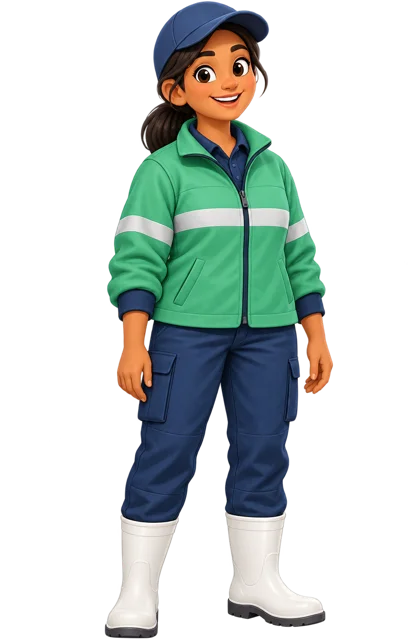
Who’s in it
LeenaAdds the missing parts to the project picture.Meet Leena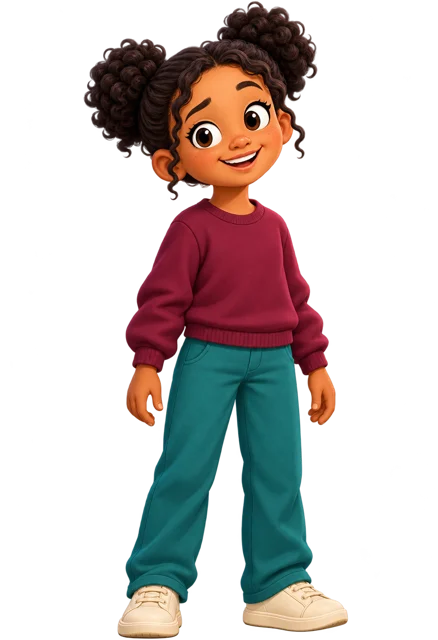 ZaraNotices the first picture stops too soon.Meet Zara
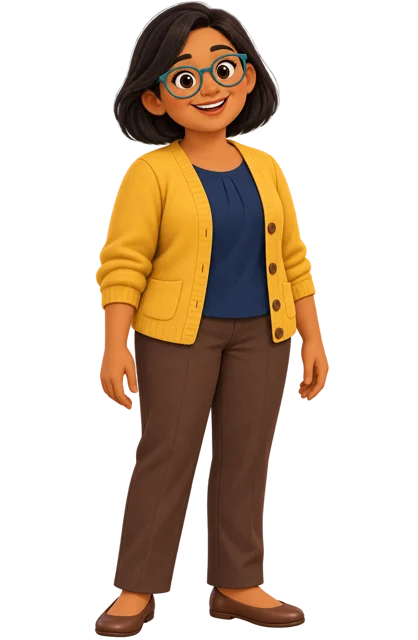 IslaSupervises Zara and adds the care and checking roles.Meet Isla
The story
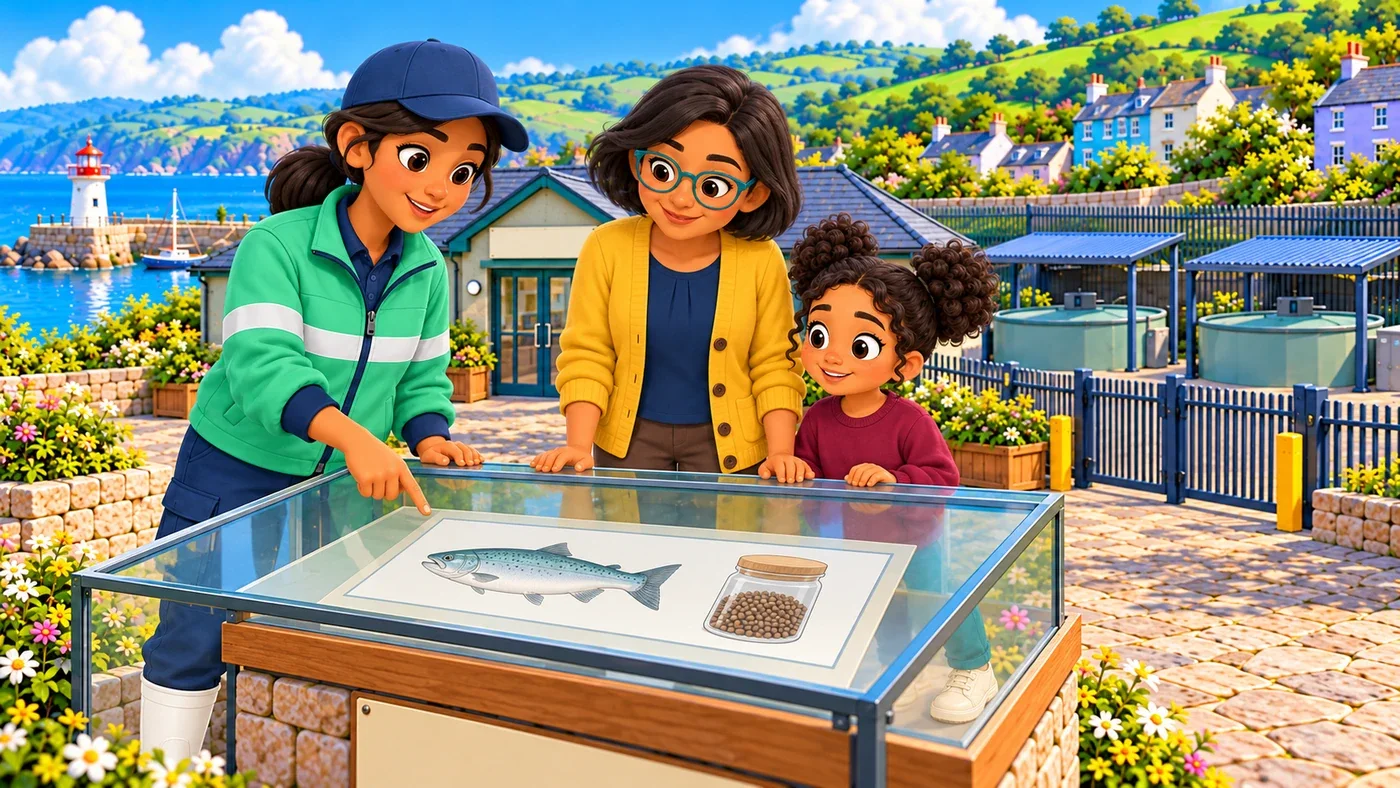
At Bracken Waters, Leena showed Isla and Zara a picture from a made-up learning project. It had a fish and a jar of ingredients.
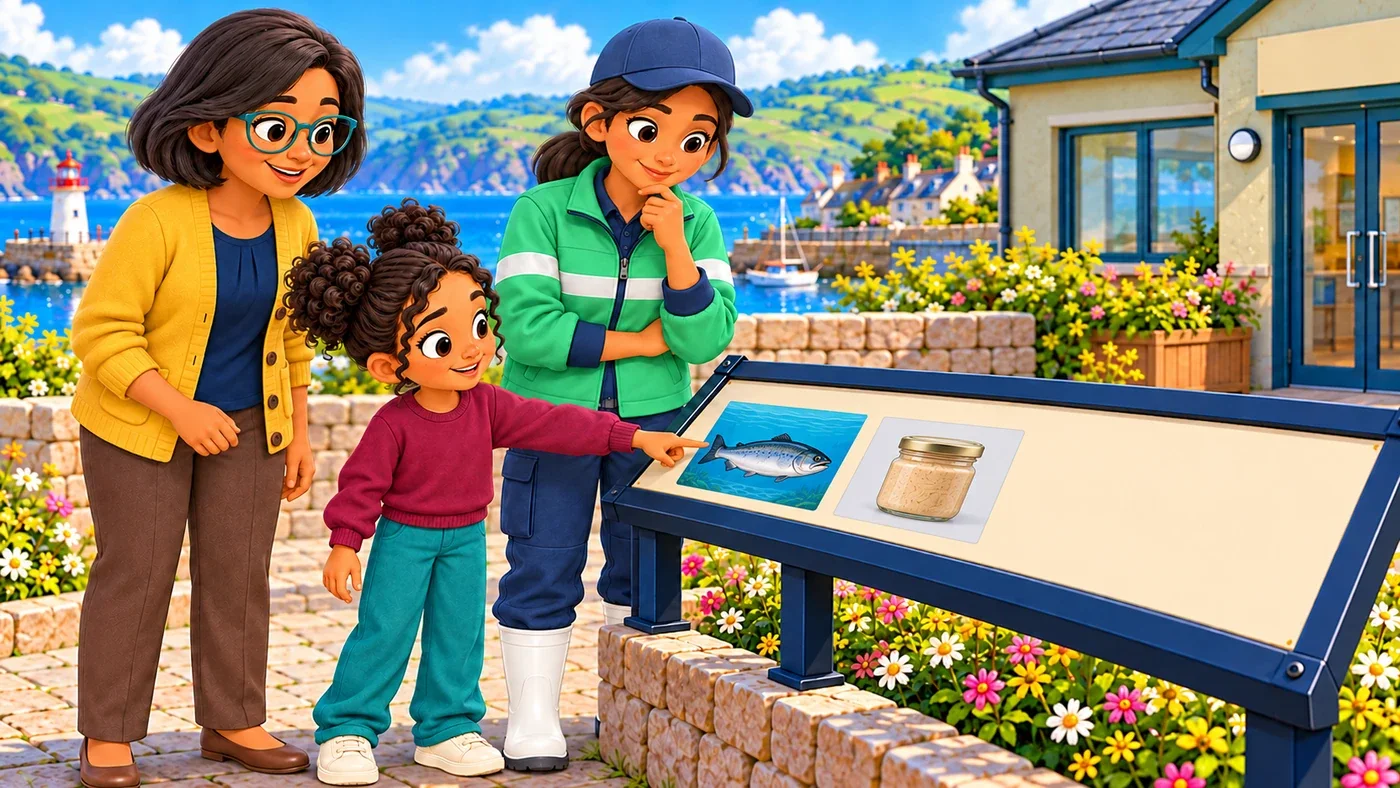
Zara pointed to the end of the pictures. It stopped at the fish! What about everything else?
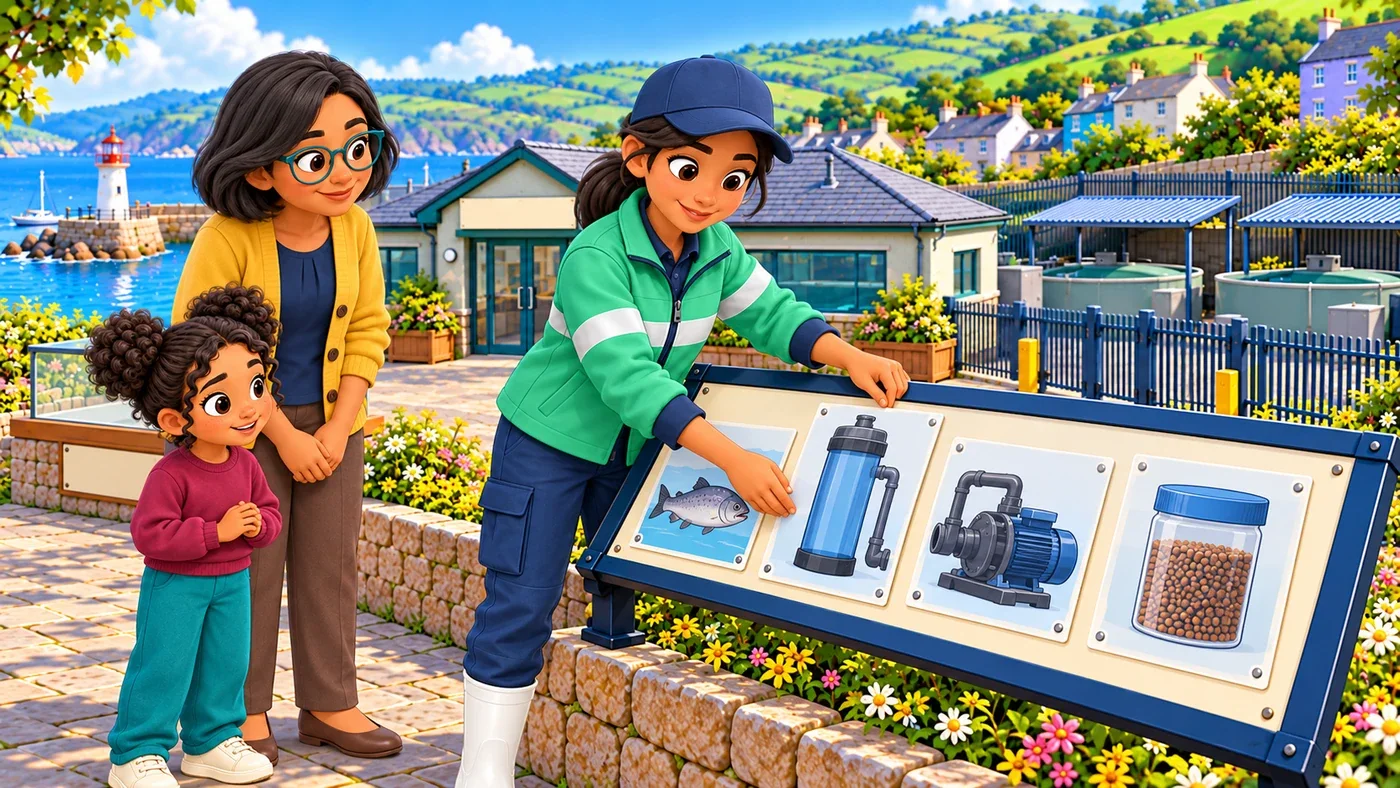
Leena added three new pictures: a water filter, a pump and an ingredient jar. The water needs cleaning, and the pump needs energy.
For grown-ups: How the water is reused, simply: water from the tanks goes through solids removal, then biological treatment, then oxygen and water-quality checks before it goes back. The pumps and treatment need energy, the water needs checking and topping up, and this is not drinking water.
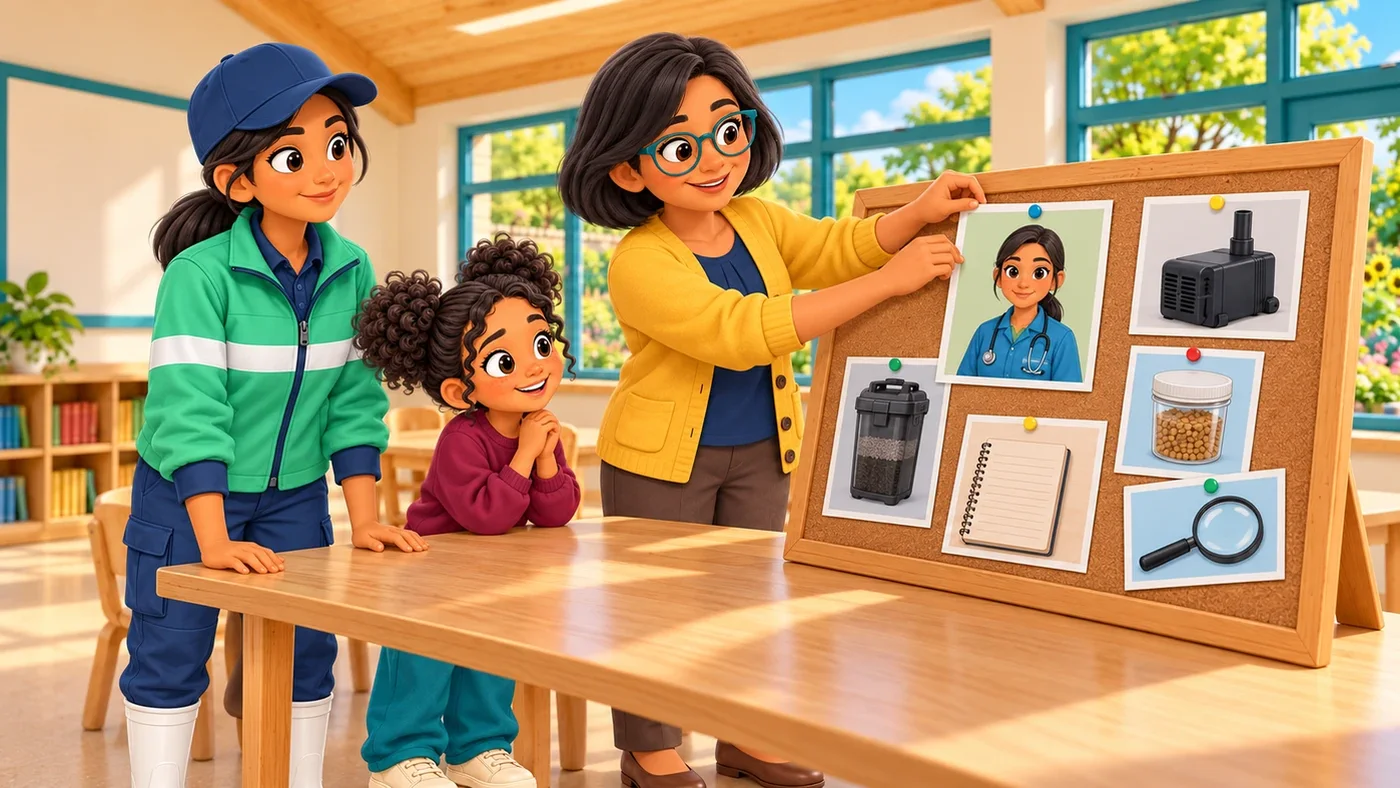
Back at school, Isla added a picture of a trained fish carer. Someone needs to look after the fish and check things properly.
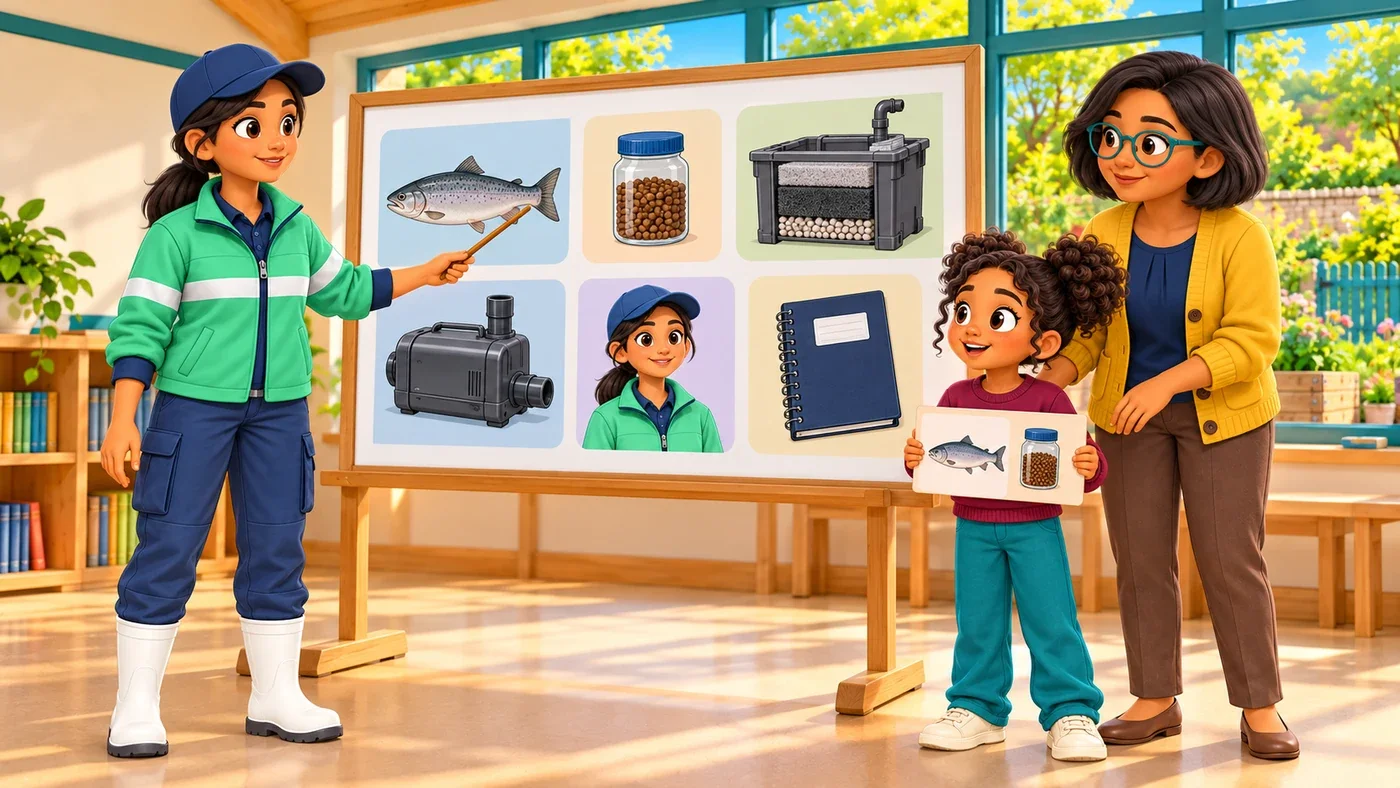
Zara held up the first, simple card. The new display was much bigger, because it showed all the jobs, not just the fish.
For grown-ups: The full picture shows the product and the responsibilities together: suitable inputs, water treatment and topping up, energy for the pumps and treatment, water-quality and oxygen checks, proper care for the fish, and checks by someone independent. These are questions to ask, not proof that everything has passed.
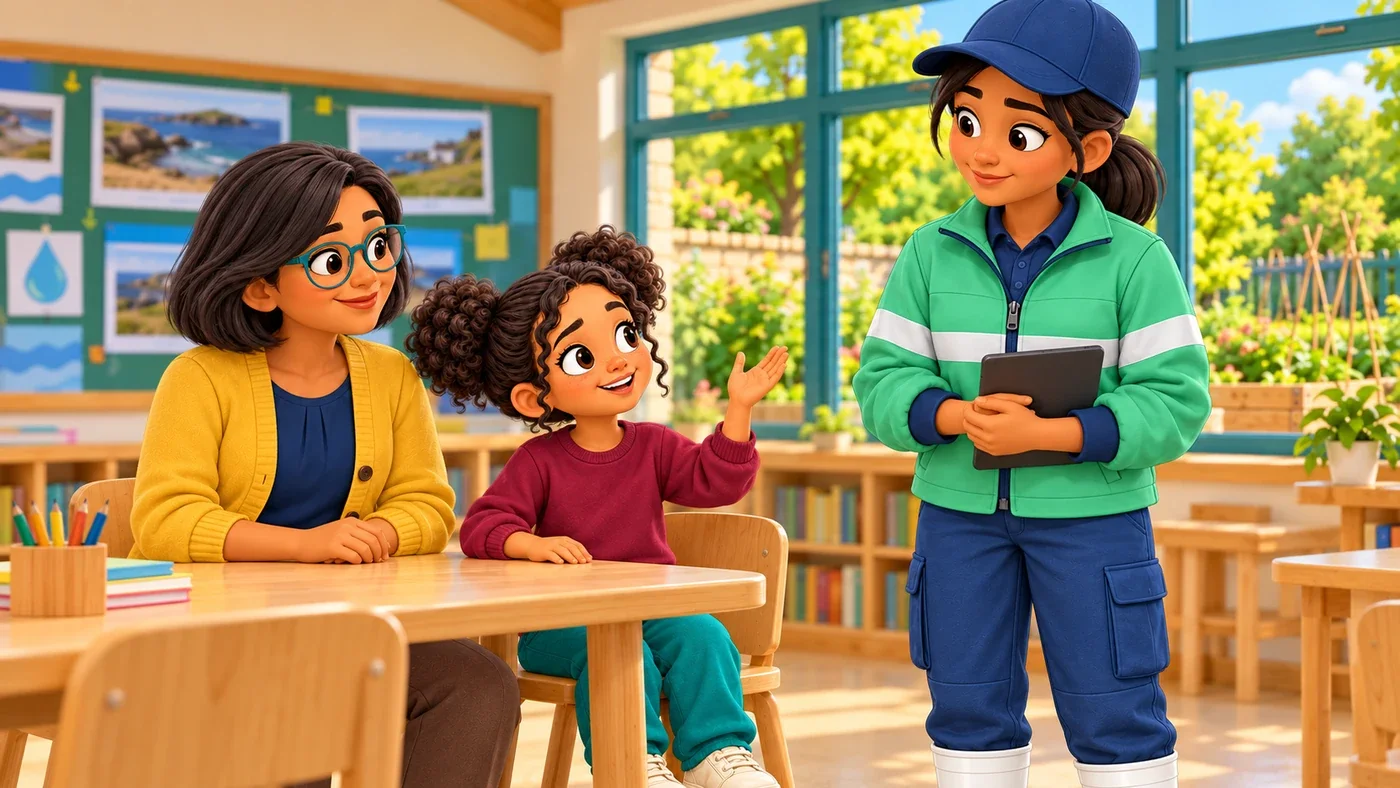
Zara had one more question for Leena. Asking good questions was the best way to finish.
Zara: “Can you show me how that works?”
For grown-ups: What goes in? What care and energy are needed? What happens to the water? Who checks the effects? Ask useful questions; nobody can promise zero impact.
Draft, 20 October 2026. The words and pictures are not yet reviewed by an educator. The story follows the outline in our story guide.
The real-life bit
This is a made-up learning project, not a real local fish farm. In fish farms that reuse their water, the water goes through solids removal, biological treatment and oxygen and water-quality checks before it returns, and the pumps need energy and the water needs topping up (Food and Agriculture Organization of the United Nations). A useful product does not prove there is no impact, so ask what goes in, what care is needed, what happens to the water and who checks the effects. Gullbrae is made up. Your council’s own rules are the ones to follow.