
The small job
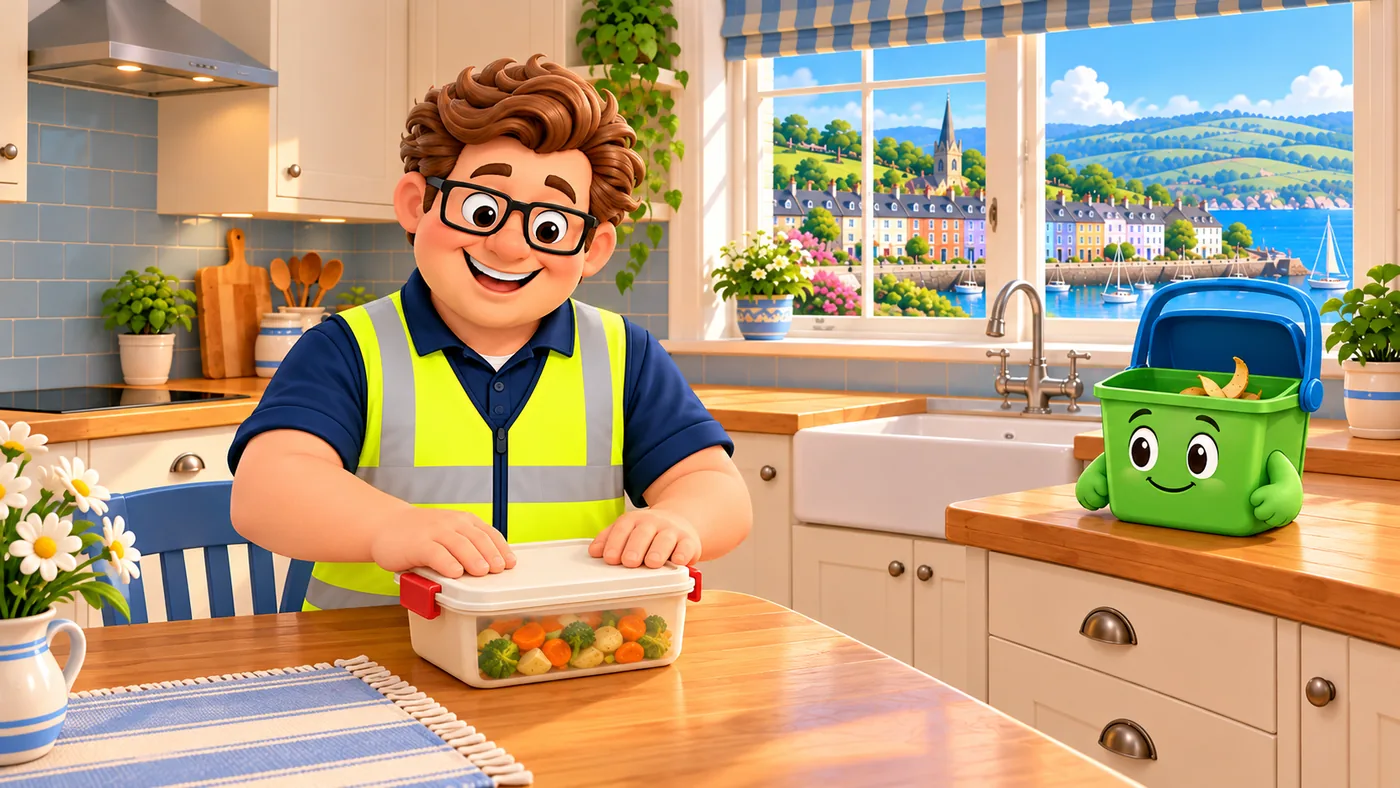
Eddie clicked the lid onto a tub of leftover vegetables. Another meal was ready.
Wee Bin peered at the few potato peelings inside his caddy.
“All that cooking,” he said, “and this is my whole job?”
“Nae need tae fill a bin wi food we can still eat,” said Eddie.
In English: No need to fill a bin with food we can still eat.
“But do a few peelings do anything?”
Eddie paused. He knew where the collection lorry went. After that, he wasn’t sure.
“I’ll ask Amina, then come back an tell ye.”
In English: I’ll ask Amina, then come back and tell you.
Eddie has a theory
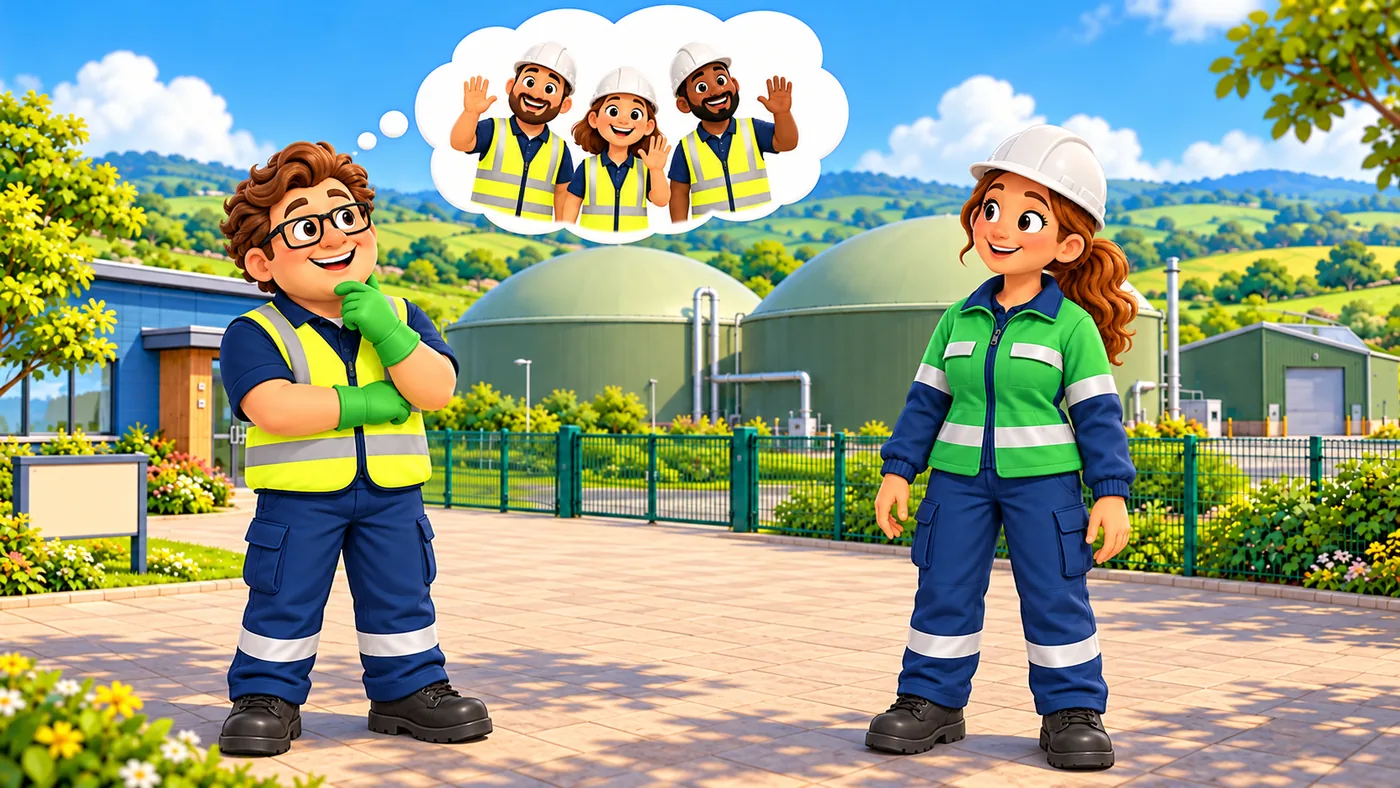
After the scraps had been collected, Eddie visited Amina at the bio plant’s visitor fence.
“Wee Bin wants tae ken what happens tae his peelings,” he said.
In English: Wee Bin wants to know what happens to his peelings.
He pictured tiny workers busy inside the tanks.
“Have they aw got wee hi‑vis jaikets?”
In English: Have they all got little hi‑vis jackets?
Amina laughed. “You’re imagining quite a team!”
The hidden workers
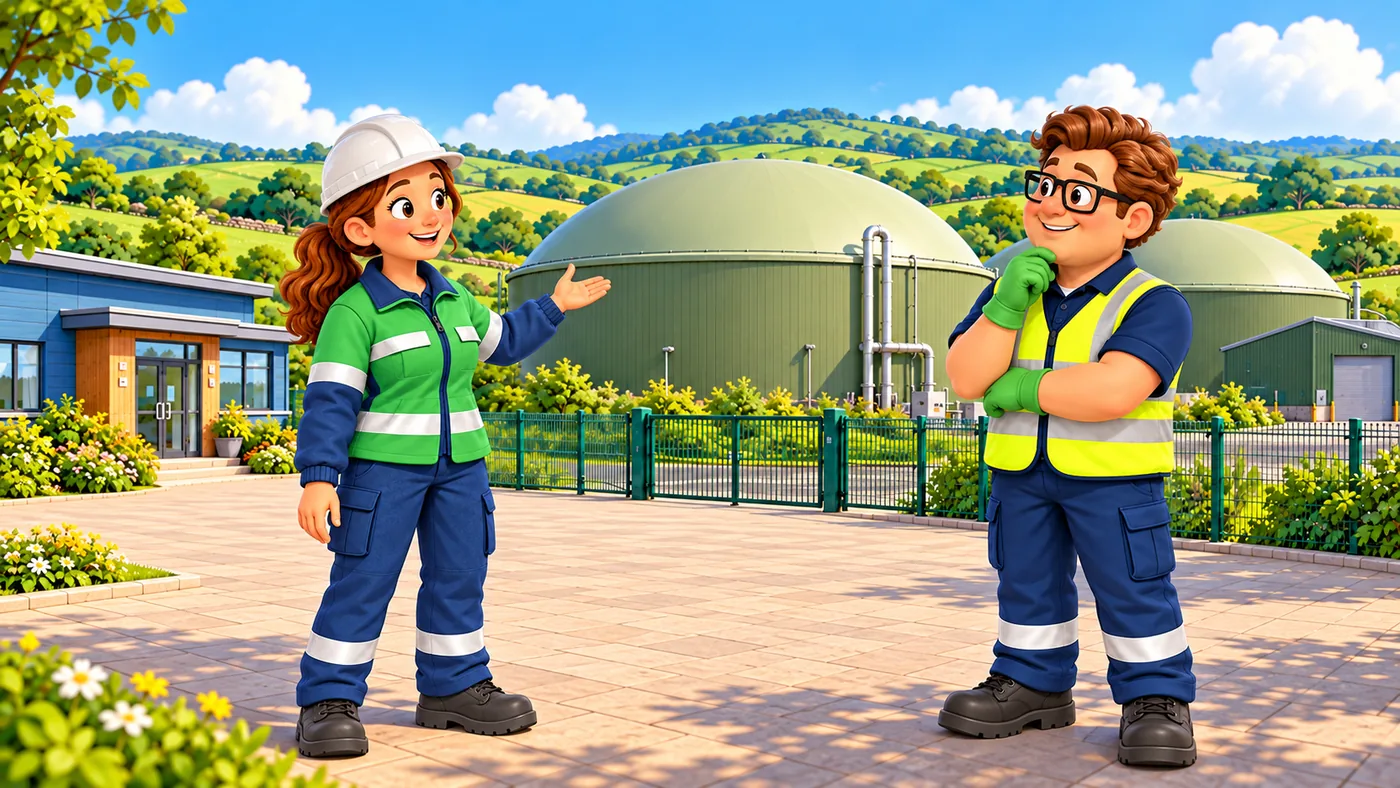
“The real workers are microbes,” Amina said. “Tiny living things, too small to see without special equipment. They break down the scraps inside a sealed tank, without oxygen.”
Eddie looked at the enormous tanks.
“Aw that work, an nae wee jaikets.”
In English: All that work, and no little jackets.
“Exactly. And no little jackets.”
Two useful jobs
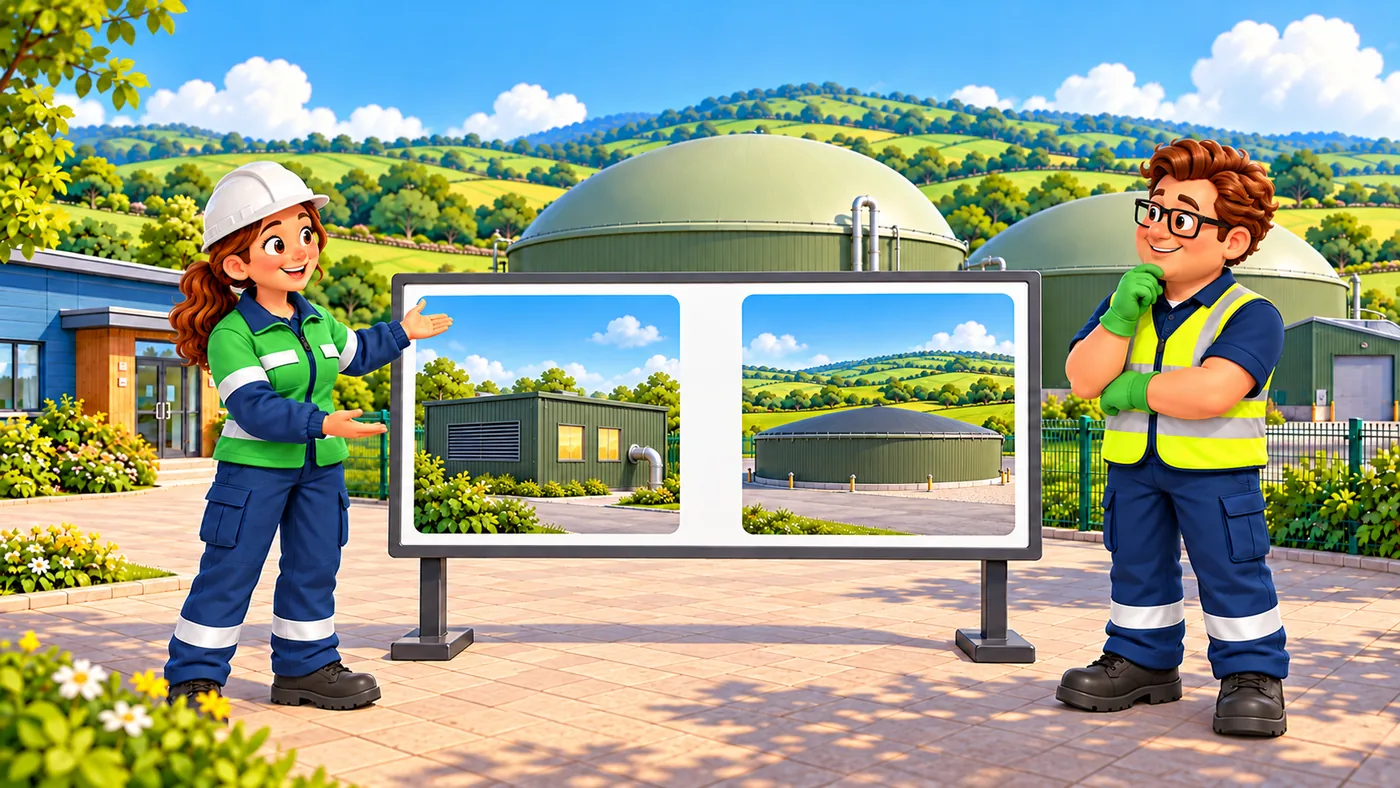
Amina showed him two pictures.
“One shows where we use biogas to make energy. The other shows a store for digestate. Digestate contains nutrients, and suitable digestate is used as fertiliser to help plants grow.”
“So Hamish gets his denner fae the plant?”
In English: So Hamish gets his dinner from the plant?
“Neither scraps nor fertiliser! Hamish eats grass. The fertiliser helps the grass grow. Scraps and fertiliser are never his lunch.”
Eddie grinned. “I’d best tell Wee Bin afore I tell Hamish.”
In English: I’d better tell Wee Bin before I tell Hamish.
An answer for Wee Bin
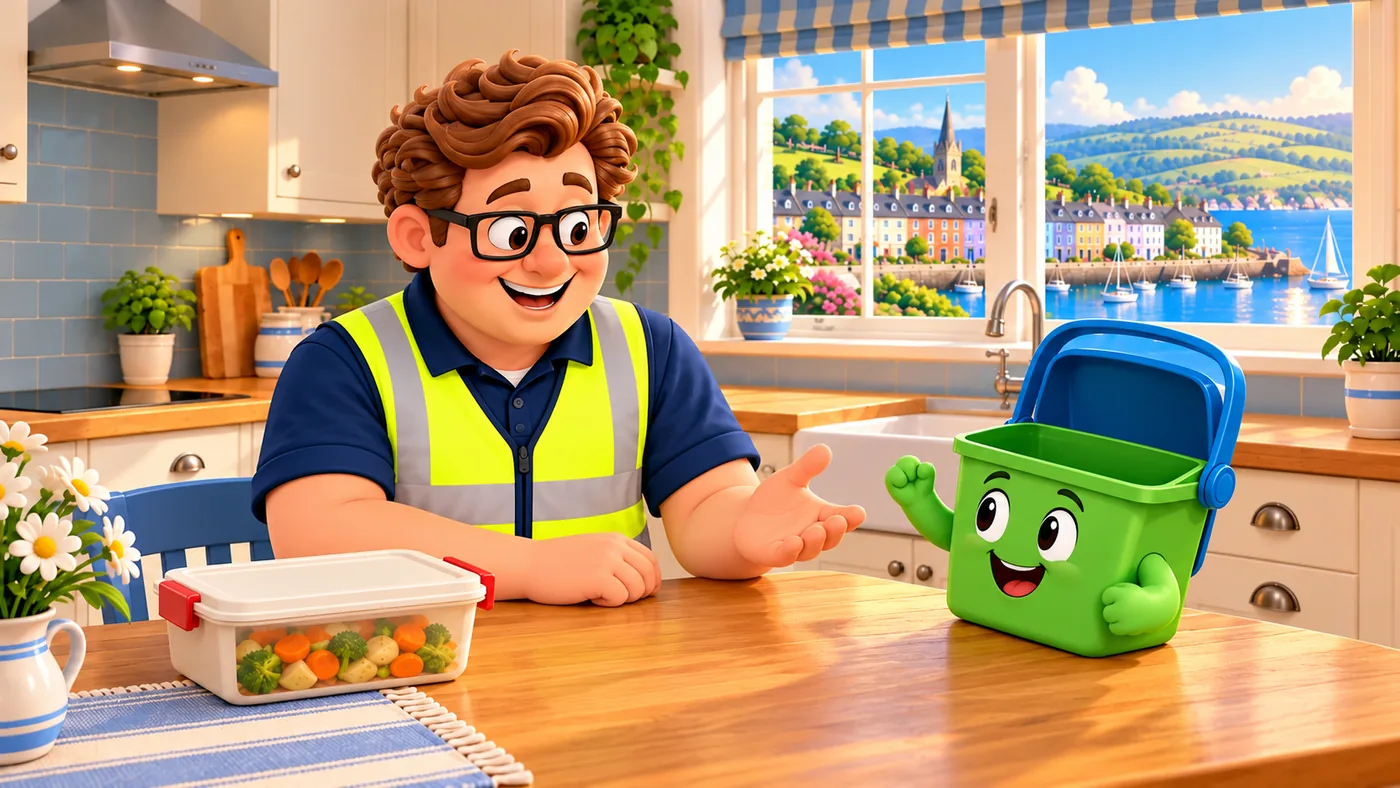
Back in the kitchen that afternoon, Wee Bin was waiting.
“Well?”
Eddie explained how the scraps help make gas for energy and fertiliser for plants.
Wee Bin lifted his lid. “So my few peelings count.”
“Aye. Save the guid food first.”
In English: Yes. Save the good food first.
Eddie pointed to the tub.
“What’s on the menu?” asked Wee Bin.
“Saved denner.”
In English: Saved dinner.
“Excellent choice,” said Wee Bin.
Later at the farm

On a later visit, Fiona held up a picture of the field from earlier. Now Hamish was grazing in the long grass.
“The fertiliser helped this grass grow,” she said. “I checked the fertiliser and followed the grazing rules before letting Hamish back.”
The short menu

Eddie stood beside Fiona and watched Hamish take another mouthful.
“He looks fair pleased wi yer work, Fiona.”
In English: He looks pleased with your work, Fiona.
Then he gave Hamish a grand wave.
“Right, Hamish. Whit’s on the menu the day?”
In English: Right, Hamish. What’s on the menu today?
Hamish chewed slowly.
Grass, he thought. Excellent choice.
After the story: where the peelings go
A recap to look at together. This is one example journey. Your council might use a different one.