
Draft storyAt the castle
The stream at the castle
Hugo shows how moving water, not the pipe, makes electricity.
A draft: the words and pictures are waiting for an educator’s review.

Who’s in it
HugoShows how the castle stream could make electricity.Meet Hugo CecilyHelps with the learning pictures.Meet Cecily
 EddieThinks the pipe makes the power, then sees the difference.Meet Eddie
 ZaraHelps sort the pictures with Hugo.Meet Zara
 ArthurAsks where the water goes afterwards.Meet Arthur
The story
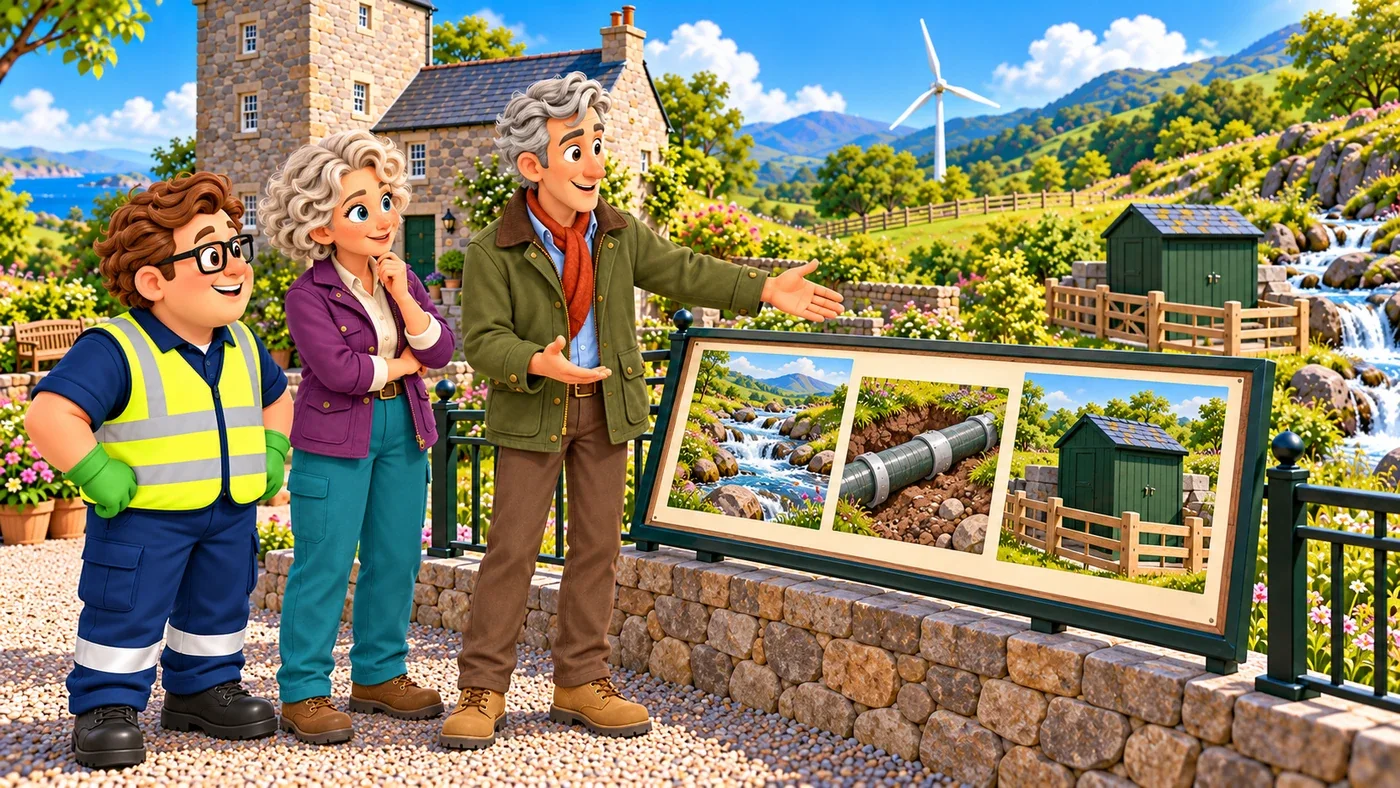
Hugo had an idea for the stream behind the castle. He showed Cecily and Eddie a big learning picture of the stream, an old pipe and a little turbine shed.
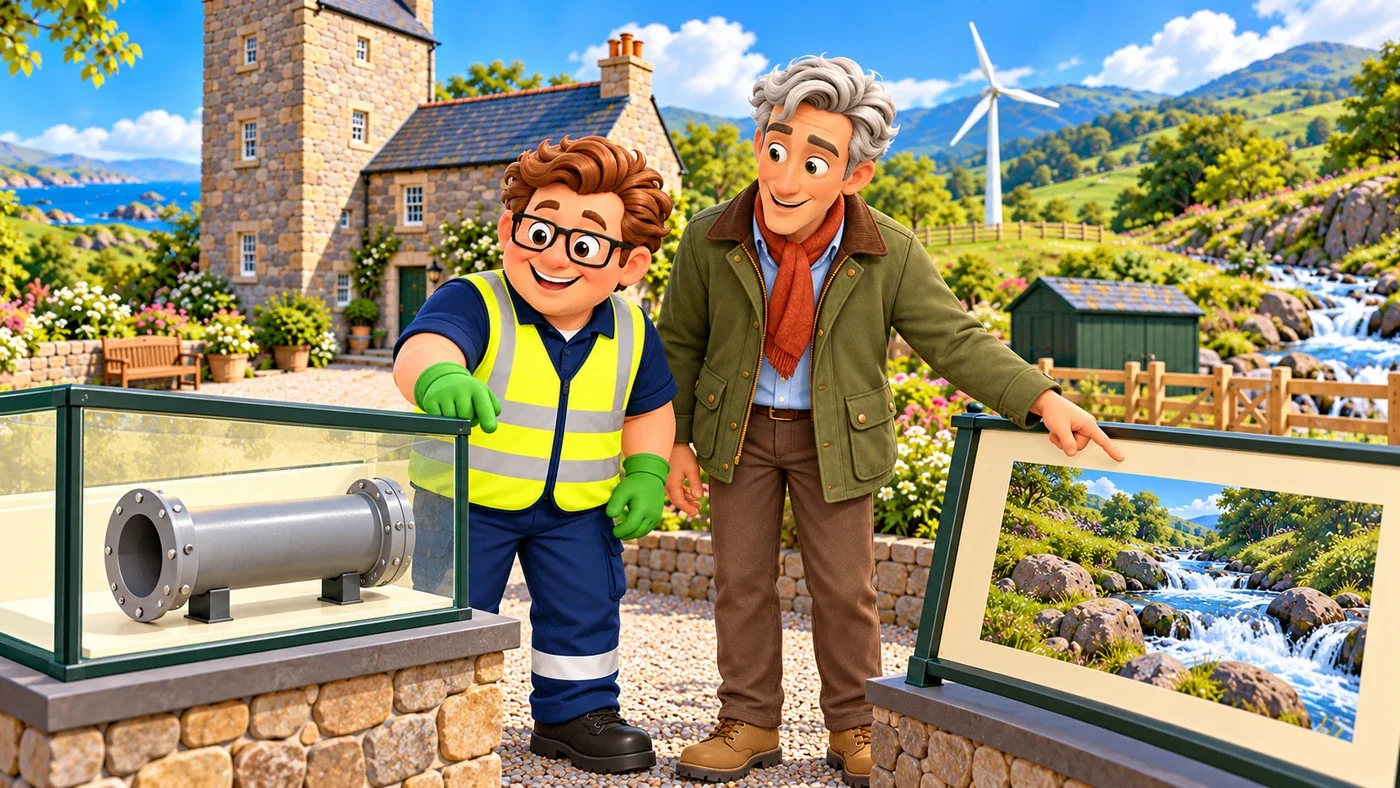
Eddie pointed at the old pipe. “So the pipe makes the power?” Hugo smiled and pointed to the picture of rushing water instead.
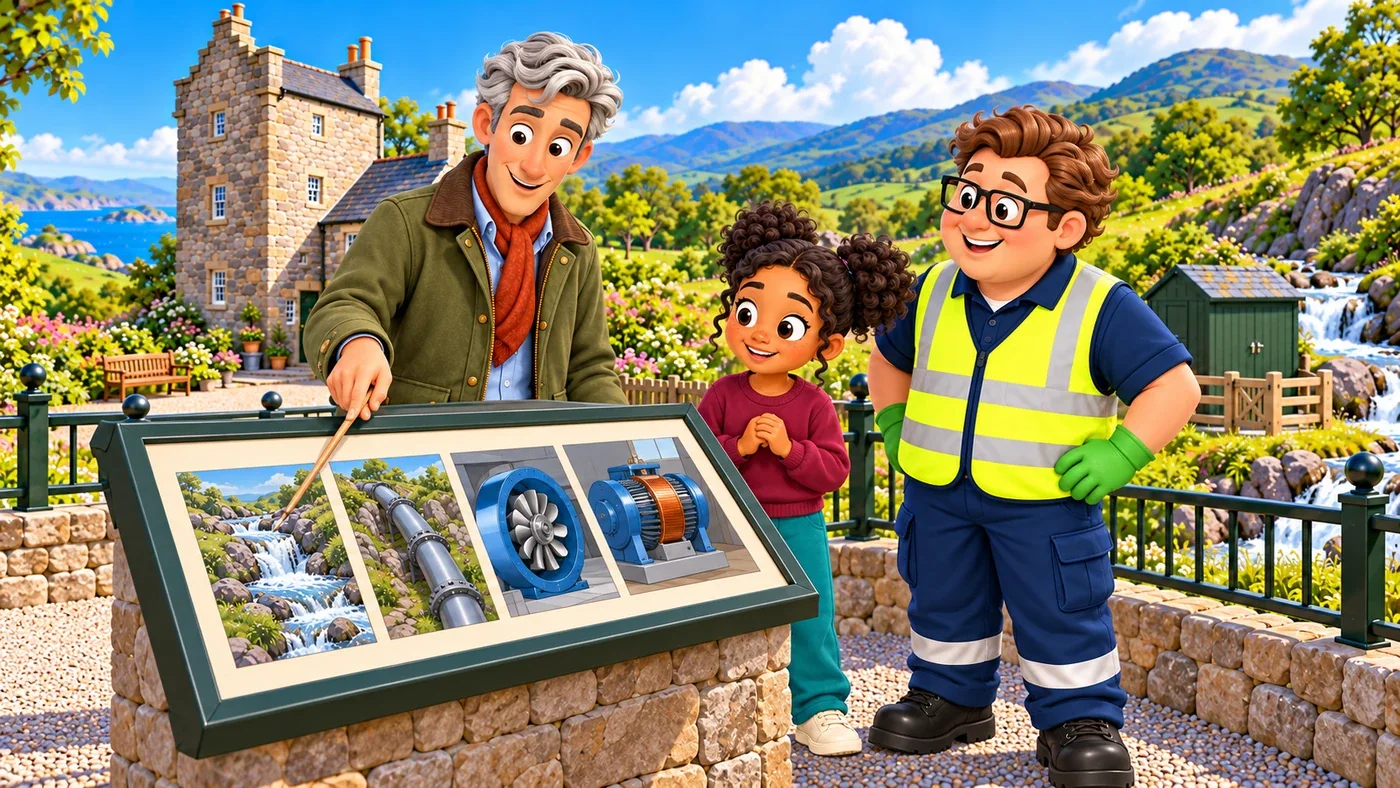
Hugo pointed to each picture in turn. The moving water ran through the pipe, turned the turbine, and the turbine turned the generator.
Zara: “Can you show me how that works?”
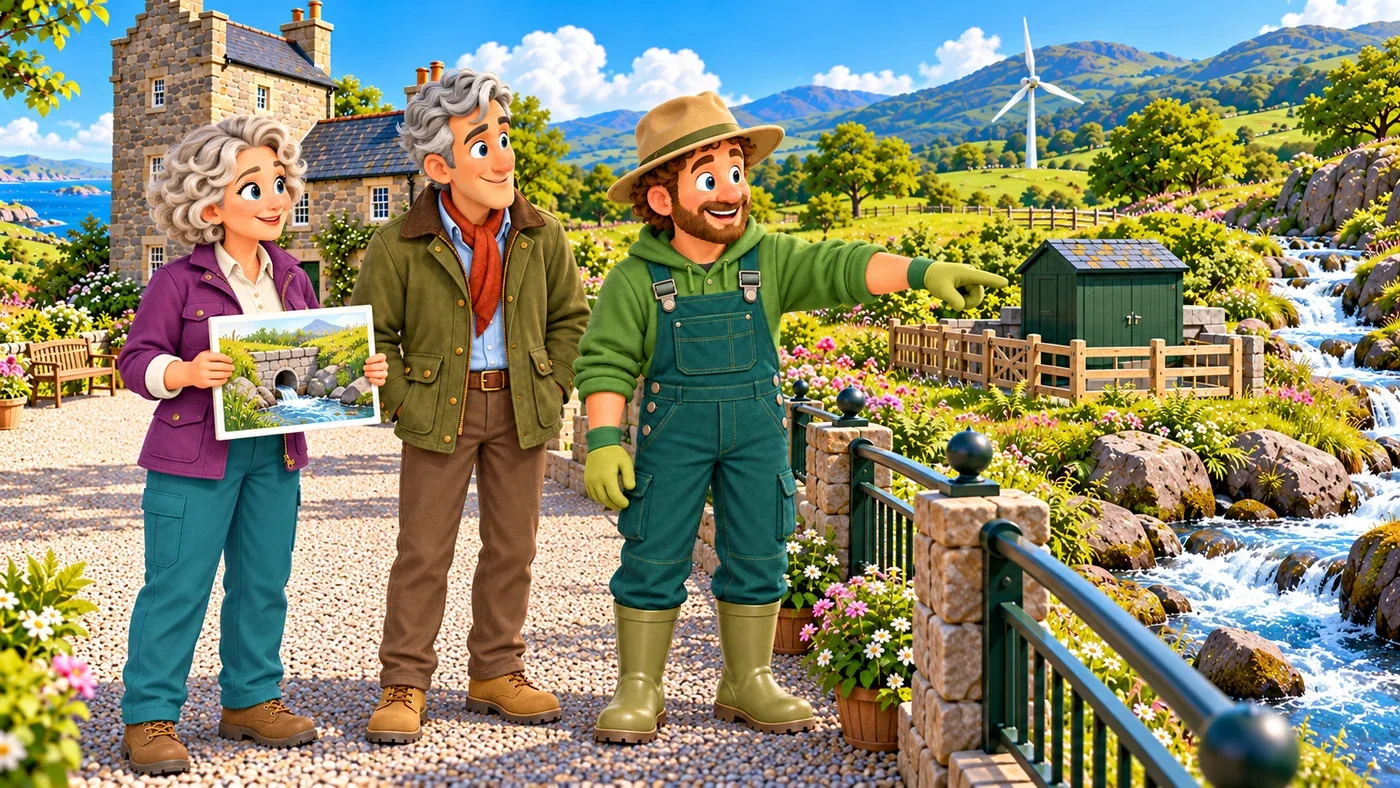
Arthur pointed downstream. “Where does the water go afterwards?” Cecily held up a picture showing it flowing back into the stream.
For grown-ups: The water that has passed through the turbine goes back into the stream further downstream; this is separate from the electricity. A real scheme needs professionals to check the flow, the wildlife and the permissions, and this picture is not a building plan.
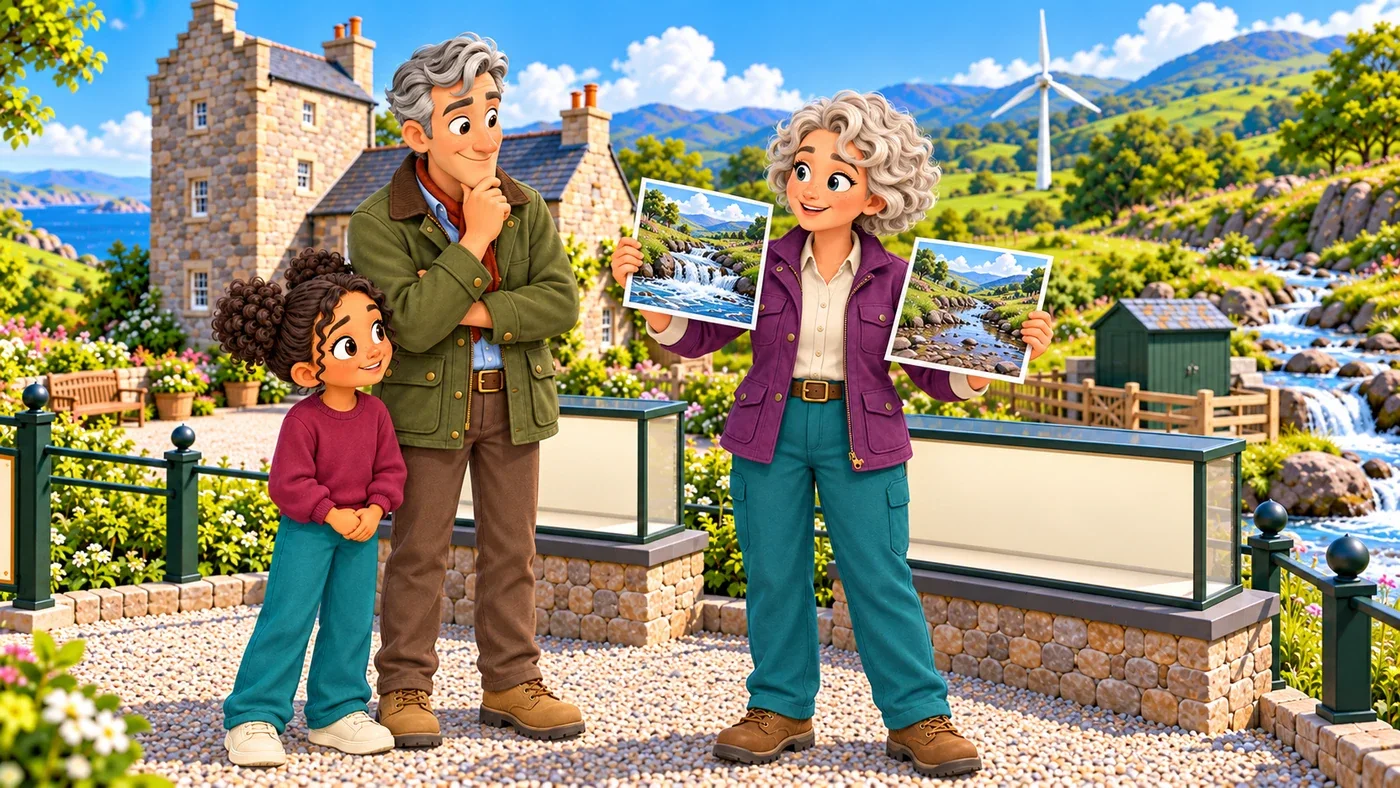
Cecily held up two pictures, one of a full, fast stream and one of a gentle trickle. Hugo explained that less water moving means less electricity.
For grown-ups: These two pictures compare conditions; they are not measurements. How much electricity a stream can make depends on the site and the flow, and it will not power a whole castle all the time.
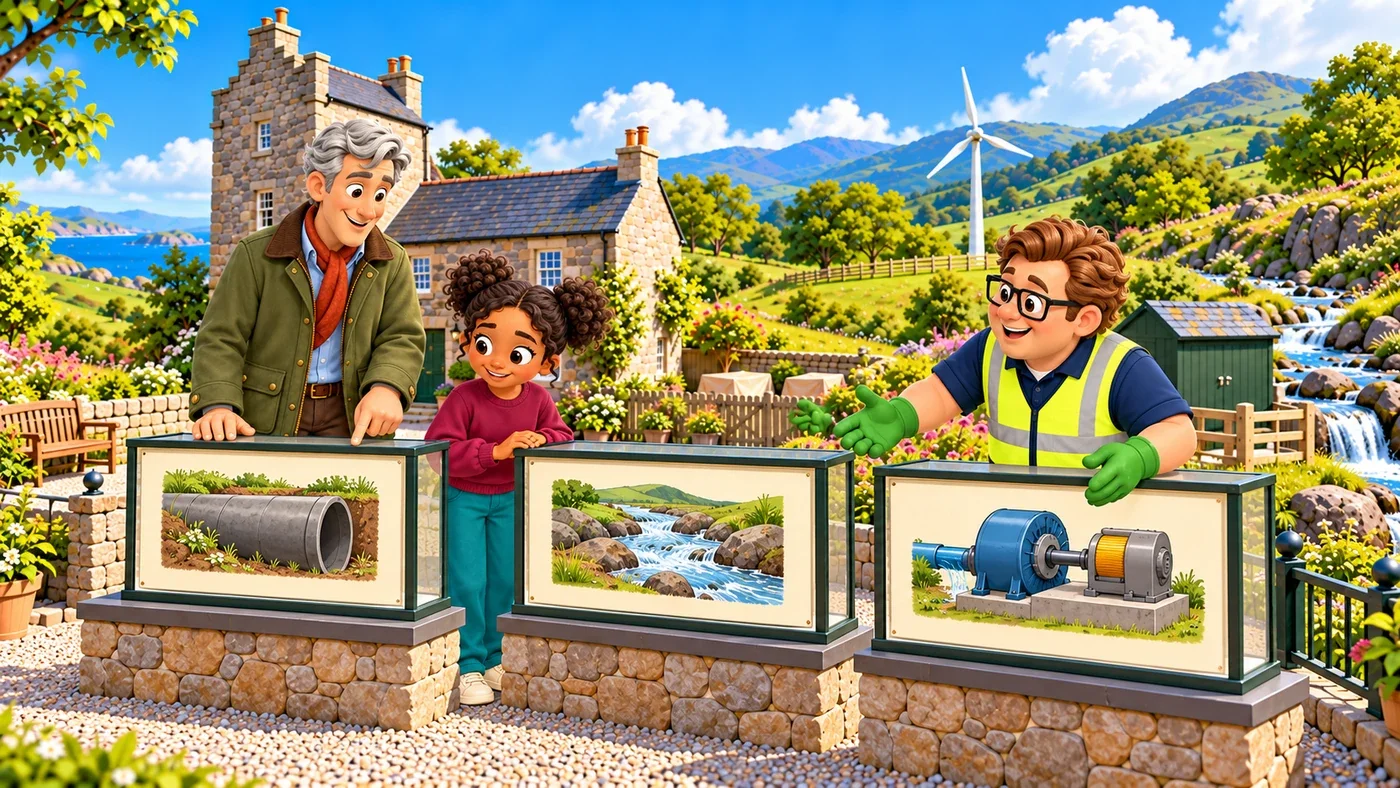
Zara and Hugo set out three pictures: the pipe, the moving water and the generator. Eddie nodded. Each one had its own job.
For grown-ups: The three pictures are three different roles. The reused pipe is the material that carries the water. The moving water is the energy source: it flows through the pipe and turns a turbine. The turbine drives a generator, which produces electricity, and the water returns to the stream separately downstream.
Draft, 20 October 2026. The words and pictures are not yet reviewed by an educator. The story follows the outline in our story guide.
The real-life bit
Moving water can turn a turbine, and the turbine drives a generator that makes electricity, while the water returns to the stream downstream (US Department of Energy). How much electricity a stream can make depends on the site and the flow, and a real scheme needs professionals to check the flow, the wildlife and the permissions first. Gullbrae is made up. Your council’s own rules are the ones to follow.