
BinDayBuddy home

Where things go next

The bio plant

Food scraps from the town’s caddies come here. Inside the big sealed tanks, tiny living things break the food down without air.
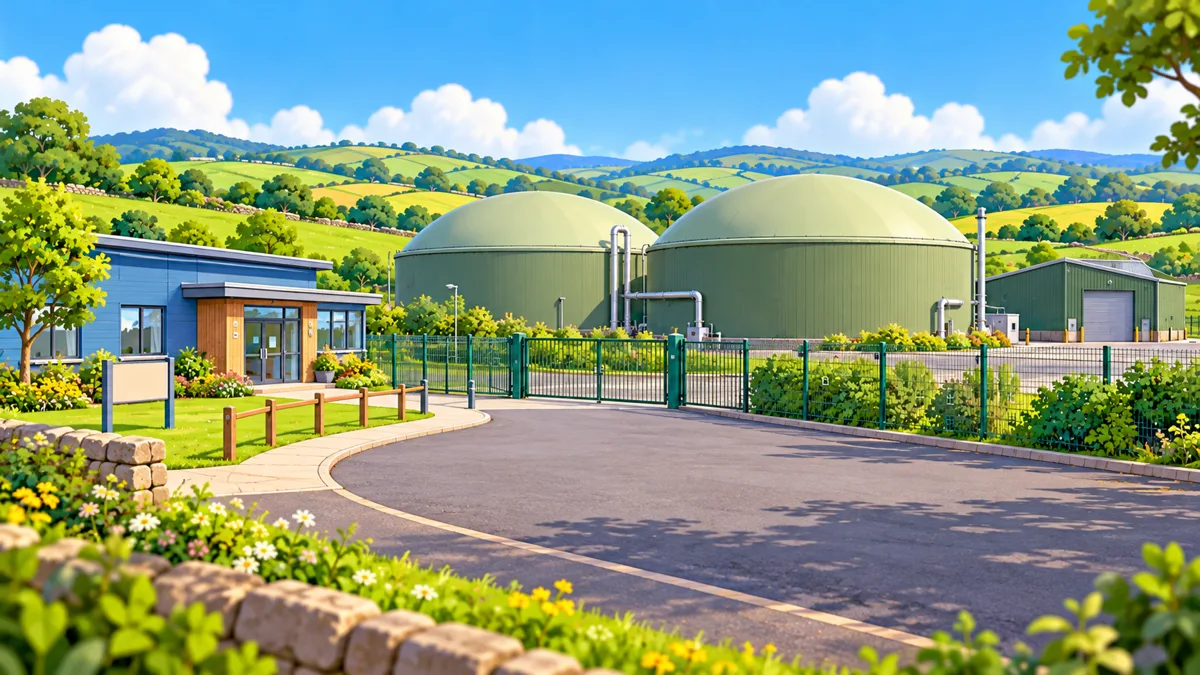
The Gullbrae bio plant: two large round green tanks behind a fence, an office building and a path to the visitor viewing point.

Who works here

Amina runs the bio plant with her team. She calls the microorganisms the tiniest workers in town. When Eddie asks if they need hi-vis, she tells him the people running the plant do.

Meet AminaMeet the crew

What happens here

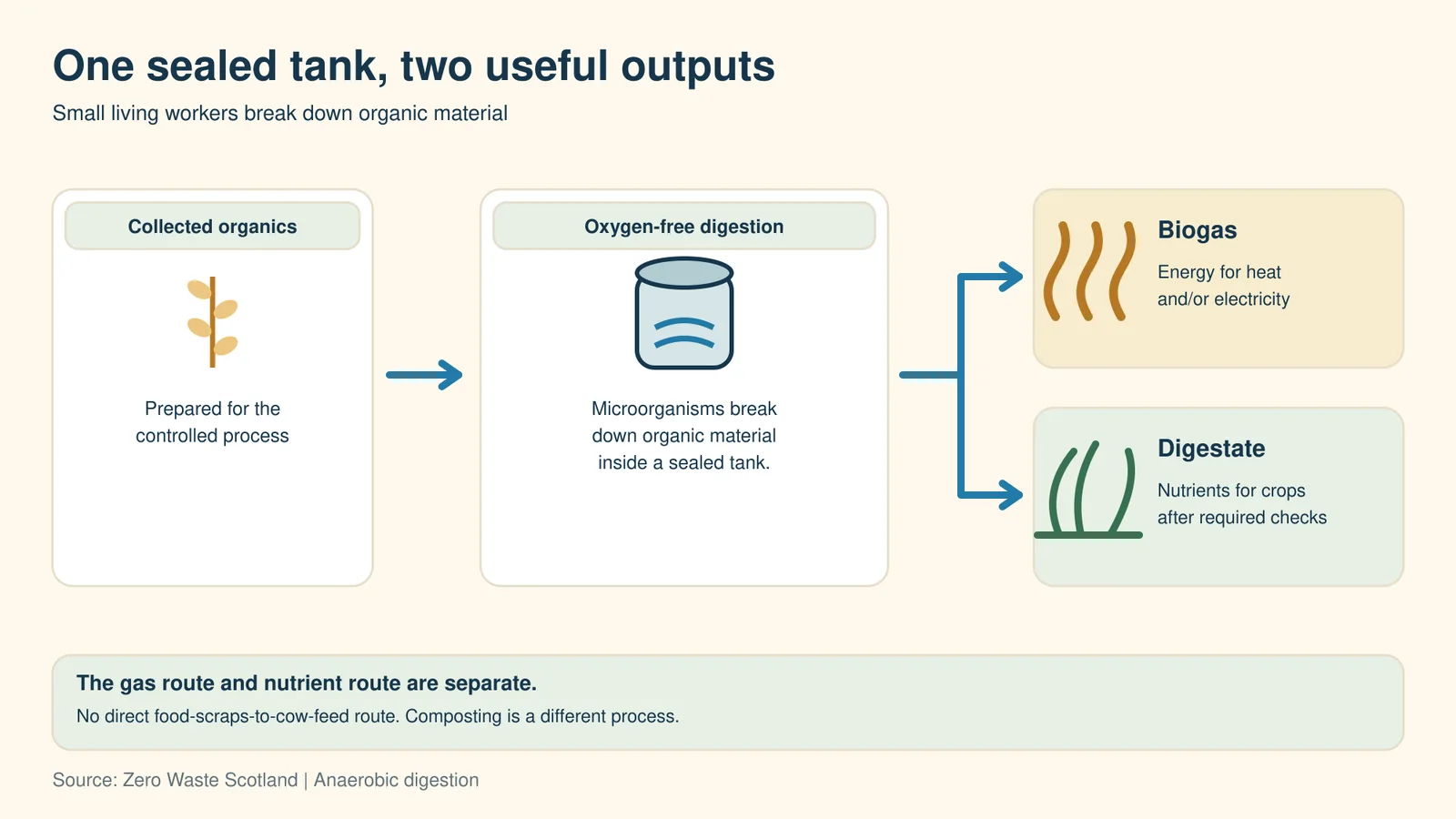
  1. Food scraps arrive. Things that don’t belong, like wrappers, are taken out.
  2. In sealed tanks, microorganisms break the food down without oxygen. This is called anaerobic digestion.
  3. Two useful things come out: biogas, used to make heat or electricity, and digestate, which is checked before it can be used as fertiliser.

Visitors watch from the viewing point. Some councils compost food waste instead. Source: Zero Waste Scotland, anaerobic digestion.
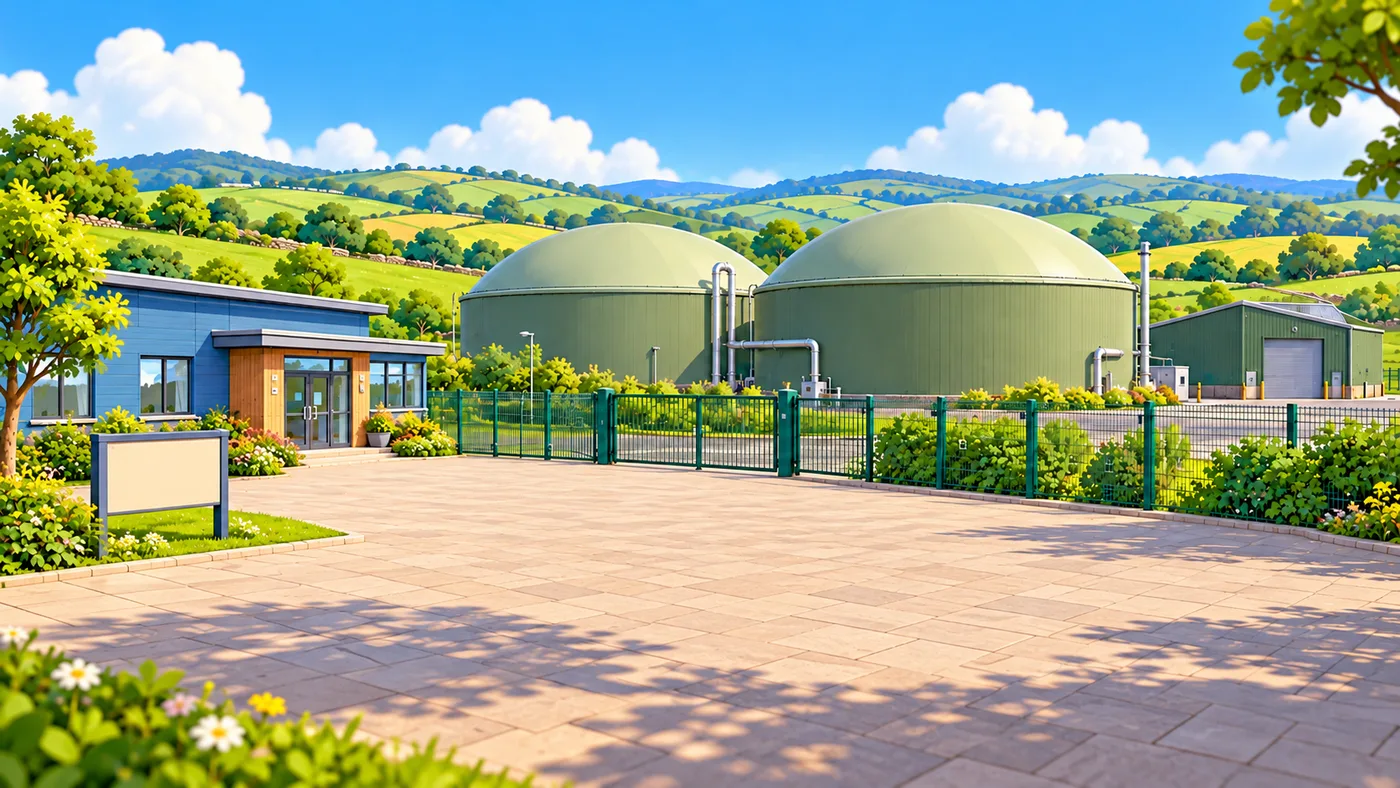
The visitor terrace at the bio plant: a paved viewing area and a blank display board in front of the fence, with the two green tanks behind it.
The visitor terrace. Visitors stay this side of the fence.
The terrace display: collected food scraps go into a sealed tank with no oxygen, and two separate arrows lead out, one to biogas and one to digestate. The words are in the list above.
The terrace display says the same as the three steps above. The gas and the fertiliser go separate ways, and none of it is animal feed.
What happens to food waste? The full guide

Stories at the bio plant

Hamish’s short menuSave good food first. Scraps can make energy and fertiliser, and Hamish eats grass.Read nowThe wrapper questionPut food scraps in the caddy the way your council asks.Read nowThe smallest crewIn sealed tanks, tiny living things break food scraps down without air.Read nowTwo useful branchesThe bio plant makes two things: gas for energy and a fertiliser for fields.Read nowGive the field timeFields that get fertiliser need care and time before animals graze.Read nowThe grass lunchHamish’s grass grows in a field that farmers look after.Read nowThe question everyone hadA good question can start a great science lesson.Read nowThe two arrowsGas from food scraps and fertiliser for fields go to different places.Read nowThe field is not the feed troughA field and a feed trough do different jobs.Read now
Food waste learning packFor home and school, with the answers.Open the pack